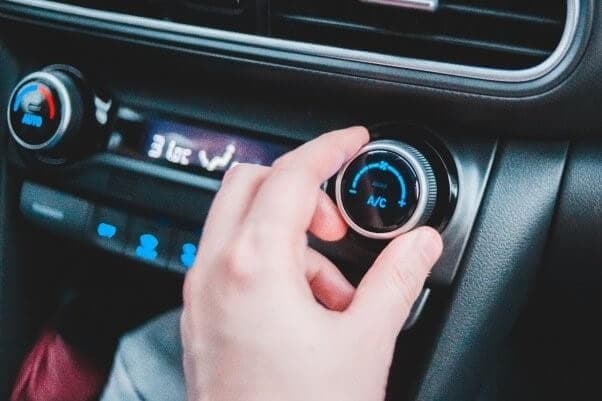
Why Your Car AC Stops Cooling After 30 Minutes in UAE Summer
Your car AC feels ice-cold for the first few minutes, then quietly gives up halfway through your commute. If you have ever pulled into Sheikh Zayed Road traffic sweating in a supposedly air-conditioned car, you already know how frustrating this is. Here is what is really going on under the dashboard, and what it will cost to fix it in the UAE.
July 11, 2026
Ad Space - Article
Introduction
Ask any garage in Dubai or Sharjah what their busiest complaint is between May and September, and the answer is almost always the same: "My AC was fine, then it just stopped cooling." It is one of the most common automotive complaints in the UAE, and for good reason. Outside temperatures regularly cross 45°C, asphalt surface temperatures climb even higher, and cars sit in direct sun for hours in parking lots with no shade. Under those conditions, an AC system that is even slightly compromised will show its weakness fast.
The pattern is almost always identical. You start the car, the AC blows cold for the first 15 to 30 minutes, and then the air gradually turns lukewarm or warm even though the fan is still blowing at full speed. This is not your imagination, and it is not something to ignore until next year. It is a mechanical or electrical fault that will only get worse as the summer progresses.
This guide breaks down exactly why this happens, how UAE garages diagnose it, what it costs to repair, and how to prevent it from happening again.
Table of Contents
1. Common Symptoms of a Weakening AC System
2. Why AC Stops Cooling After 30 Minutes of Driving
3. How Mechanics Diagnose the Problem
4. AC Repair Cost in the UAE
5. Can You Keep Driving With a Weak AC?
6. Prevention Tips for UAE Drivers
7. When to Visit a Garage
8. Frequently Asked Questions
9. Final Thoughts
Common Symptoms of a Weakening AC System
Before the AC fails completely, most cars give warning signs. Recognizing them early can save you from a much larger repair bill later.
- Cold air for the first 15-30 minutes, then a gradual warm-up
- A hissing or clicking sound from the dashboard or engine bay
- The AC compressor cycling on and off more frequently than usual
- A faint chemical or musty smell from the vents
- Higher engine temperature readings when the AC is running
- Reduced airflow even though the fan speed has not changed
If you have noticed even two of these signs, the system is already under stress.
Why AC Stops Cooling After 30 Minutes of Driving
There are five common culprits behind this exact symptom, and UAE heat tends to expose all of them faster than in milder climates.
Low Refrigerant Levels
This is by far the most common reason. Refrigerant (commonly called Freon, though modern cars use R-134a or R-1234yf) is what actually absorbs heat from the cabin air. When levels drop due to a slow leak in a hose, seal, or fitting, the system can produce cold air briefly before the compressor overworks itself and the cooling effect fades. In UAE heat, a system with even a 20 percent refrigerant shortfall will struggle to keep up once the car has been running for half an hour.
Failing AC Compressor
The compressor is the heart of the AC system. It pressurizes the refrigerant so it can release heat efficiently. A compressor with worn internal clutch plates or a failing clutch bearing can start strong when cold, then slip or overheat as it works continuously in extreme ambient temperatures, causing cooling performance to drop noticeably during longer drives.
Clogged or Blocked Condenser
The condenser sits at the front of the car, usually just behind the grille, and its job is to release the heat that the refrigerant absorbed from your cabin. In the UAE, condensers get coated in fine desert dust, sand, and debris kicked up on highways like the E11 or E311. A partially blocked condenser cannot dissipate heat properly, especially once the engine bay itself heats up after 20-30 minutes of driving.
Failing Cabin Blower Motor or Clogged Cabin Filter
A clogged cabin air filter restricts airflow across the evaporator. At first the AC feels fine because the air is still cold, just reduced in volume. Over time, as dust builds up further during a drive (especially after off-road trips to the desert or long highway stretches), airflow drops even more, making the cabin feel like it is losing cooling power.
Electrical, Sensor, or Relay Issues
Modern UAE-spec vehicles rely on ambient temperature sensors, pressure switches, and relays to regulate the AC compressor's cycling. A faulty pressure switch or relay can cause the compressor to cut out intermittently once the system heats up, which explains why the AC works perfectly when cold and fails after sustained use.
How Mechanics Diagnose the Problem
A competent workshop will not just "add gas and send you off." A proper diagnosis usually includes:
- Checking refrigerant pressure on both the high and low side using gauges
- Inspecting for oil residue around hoses and fittings, which indicates a leak
- Using UV dye and a UV light to pinpoint leak locations
- Testing the compressor clutch engagement and amperage draw
- Inspecting the condenser fins for dust blockage or physical damage
- Scanning for fault codes related to AC pressure sensors or blower control modules
- Checking cabin filter condition and blower motor performance
This process typically takes 30-60 minutes and should be included in the diagnostic fee before any repair work begins.
AC Repair Cost in the UAE
Costs vary significantly depending on your vehicle's make and model, the workshop you choose, and whether parts are genuine, OEM-equivalent, or aftermarket. As a general guide across Dubai, Abu Dhabi, Sharjah, and Ajman workshops:
- AC diagnostic check: AED 100-250
- Refrigerant recharge (gas top-up only): AED 150-350
- Leak repair (hose or seal replacement): AED 300-800
- Condenser replacement: AED 600-1,800
- AC compressor replacement: AED 1,200-3,500
- Cabin filter replacement: AED 80-200
Luxury and German brands such as Mercedes-Benz, BMW, and Audi typically sit at the higher end of these ranges due to parts pricing, while Japanese and Korean brands like Toyota, Honda, Nissan, and Hyundai are generally more affordable to repair. Always ask for a written quote before authorizing work, and confirm whether the quote includes parts, labor, and refrigerant gas separately.
Can You Keep Driving With a Weak AC?
Mechanically, yes, you can continue driving a car with a weak or non-cooling AC without immediate danger to the engine, provided the compressor is not making grinding noises or seizing. However, there are two important exceptions.
First, if you hear a loud grinding, squealing, or seizing noise from the compressor area, stop using the AC immediately. A seizing compressor can shed metal debris into the refrigerant lines, contaminating the entire system and turning a few-hundred-dirham repair into a full system flush costing well over AED 2,000.
Second, in UAE summer, driving without functioning AC is a genuine heat-safety concern, not just a comfort issue. Cabin temperatures inside a parked car can exceed 60°C, and even while driving, poor airflow can lead to dehydration, fatigue, and reduced concentration, which is dangerous on fast-moving highways such as Sheikh Khalifa Bin Zayed Road.
If the AC is merely weak rather than completely dead, it is safe to drive to a garage. If you hear unusual noises, have it inspected before continuing.
Prevention Tips for UAE Drivers
- Run the AC for a few minutes at least twice a week, even in winter, to keep the compressor seals lubricated
- Replace the cabin air filter every 10,000-15,000 km, or more frequently if you drive through dusty or desert areas
- Park in shaded or covered parking whenever possible to reduce heat load on the system
- Have refrigerant levels checked once a year, ideally before summer starts in March or April
- Get the condenser cleaned during routine servicing, especially if you frequently drive on highways with heavy dust exposure
- Avoid running the AC on maximum cold with recirculation off for extended periods in extreme heat, as this forces the compressor to work harder than necessary
When to Visit a Garage
Book an inspection as soon as possible if you notice any of the following:
- Cooling performance drops noticeably after 20-30 minutes of driving
- You hear hissing, clicking, or grinding sounds when the AC is on
- There is a chemical or musty odor from the vents
- The compressor clutch is cycling rapidly (engaging and disengaging every few seconds)
- You see oily residue near AC hoses or under the front of the car
Waiting typically turns a simple refrigerant top-up or leak repair into a compressor replacement, so early diagnosis genuinely saves money.
Frequently Asked Questions
How much does AC repair cost in Dubai?
Most straightforward repairs such as refrigerant recharges or minor leak fixes cost between AED 150 and 800 in Dubai, while compressor replacements can range from AED 1,200 to 3,500 depending on the vehicle.
Can low refrigerant damage the compressor?
Yes. Refrigerant carries the lubricating oil that keeps the compressor's internal components moving smoothly. Running low on refrigerant for an extended period can starve the compressor of lubrication and cause premature failure.
How often should I service my car AC?
Most UAE workshops recommend a full AC inspection once a year, ideally before the summer season, along with a cabin filter change every 10,000-15,000 km.
Why does my AC work fine in the morning but get weak by afternoon?
This is usually related to ambient heat load on the condenser combined with marginal refrigerant levels. As outside temperatures rise through the day, a system that is already borderline struggles more.
Is it normal for AC to smell musty when first turned on?
A brief musty smell on startup can be normal due to condensation and mold buildup on the evaporator, but a persistent smell suggests it is time to replace the cabin filter and possibly clean the evaporator housing.
Will adding more refrigerant than recommended make the AC colder?
No. Overcharging the system with refrigerant can actually reduce cooling efficiency and put excess strain on the compressor. Refrigerant levels should always be filled to the manufacturer's specified amount.
Can I recharge the AC myself with a DIY canister?
It is possible, but not recommended without a pressure gauge, since overcharging or undercharging is common with DIY kits, and it will not fix an underlying leak, which means the problem will return within weeks.
Final Thoughts
An AC that cools well for half an hour and then fades is not a random glitch, it is a system telling you something specific is wearing out, whether that is refrigerant, a compressor, or a blocked condenser. In UAE conditions, these problems progress faster than in cooler climates, so what starts as a minor annoyance in April can become a costly compressor replacement by July if ignored.
The good news is that most causes are inexpensive to diagnose and, if caught early, inexpensive to fix. A proper diagnostic check costing as little as AED 100-250 can save you thousands of dirhams in avoidable damage.
Looking for a trusted workshop? Browse AutoAtlas to find garages near you that specialize in your vehicle brand and required repair, whether you are in Dubai, Abu Dhabi, Sharjah, or Ajman.


